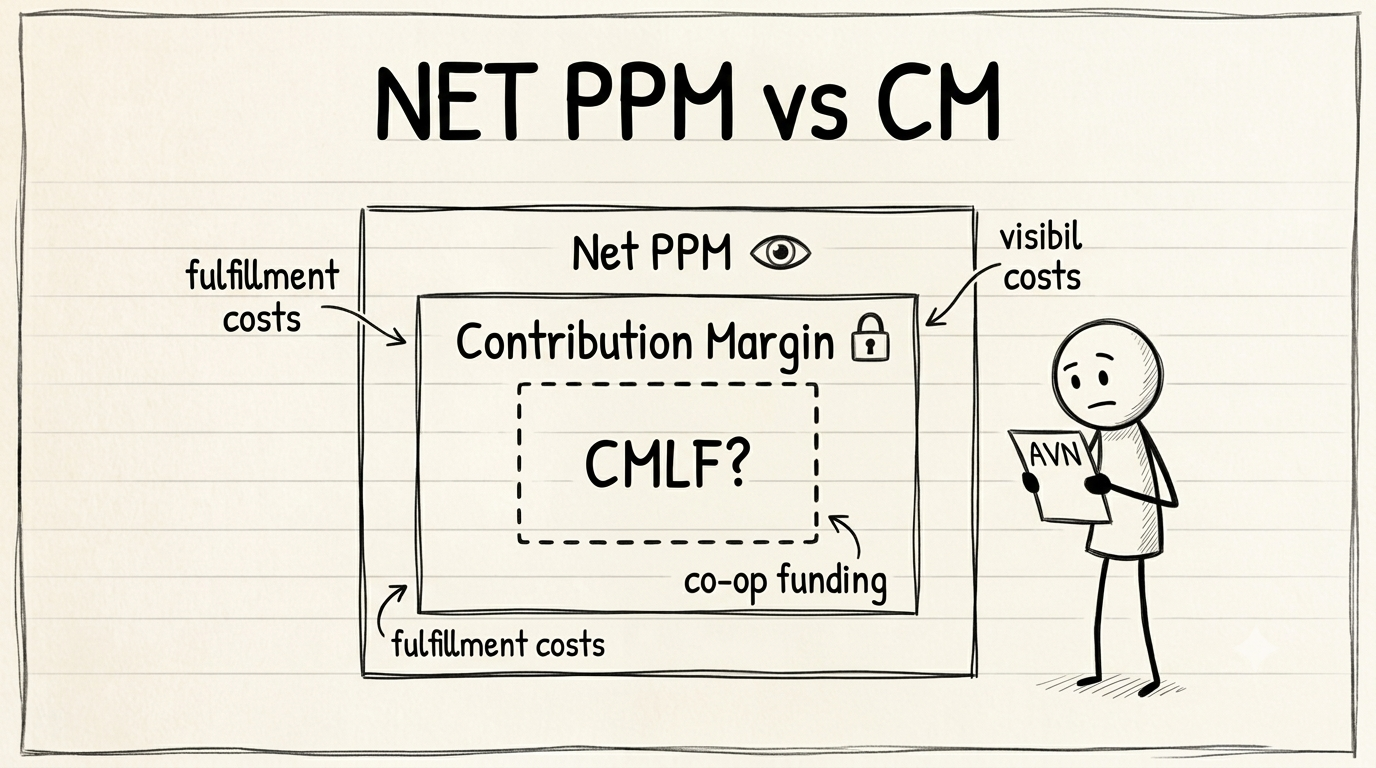
Net PPM vs. Contribution Margin: How Amazon Scores Your Profitability
What Net PPM, Contribution Margin, and CMLF measure, which one your vendor manager watches, and how to use all three before Annual Vendor Negotiations.
Read →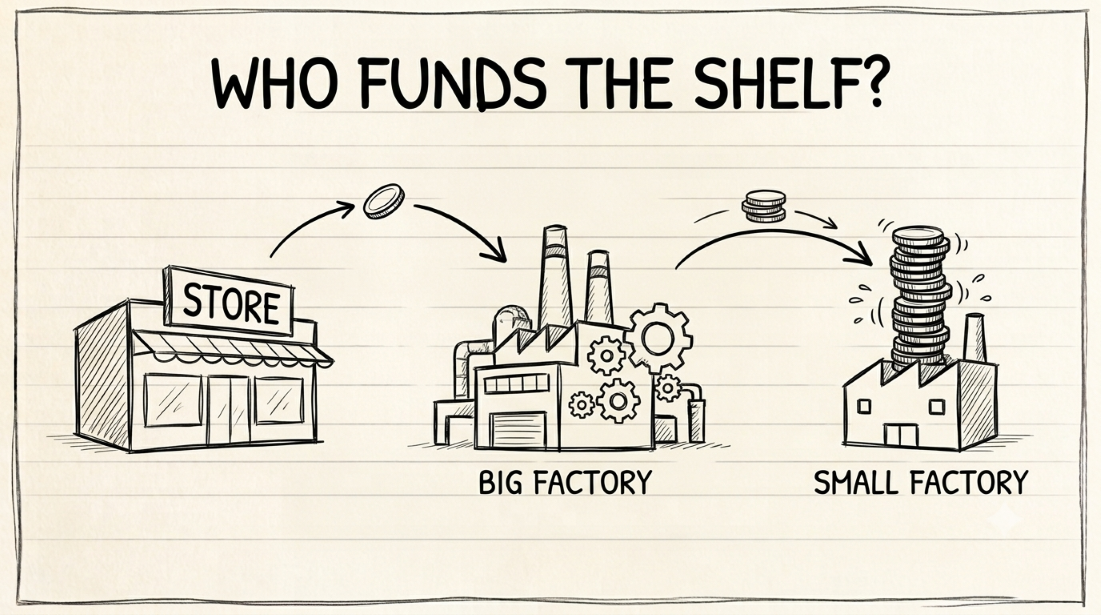
Smaller CPG Brands Fund a 68-Day Cash Gap. Two Free Tools Show Yours.
Brands under $10B carry a 68-day cash gap. The largest CPG companies carry none. Two free SEC-data tools measure yours.
Read →
From Vendor Central to Seller Central: What Actually Changes
The operational shift from Amazon 1P to 3P: what changes in ordering, fees, pricing control, and margin when you move from Vendor Central to Seller Central.
Read →
Your Team After AI: What Most Agencies Never Plan For
Most AI agencies sell a deployment. The harder question is what happens to your team and your workflows after the system goes live. That determines whether the project works or gets abandoned.
Read →
Retailer vs. Distributor Deductions: Which Ones Your Supply Chain Team Can Actually Fix
Both say 'shortage' on the remittance. One traces to your ASN, the other to a promotional agreement your broker negotiated. A sorting guide for CPG suppliers selling through both channels.
Read →
When the Deduction on Your Remittance Isn't an Ops Problem
Four deduction families trace to contracts, not operations. Three trace to your warehouse and your data. One question on a remittance line tells you which is which.
Read →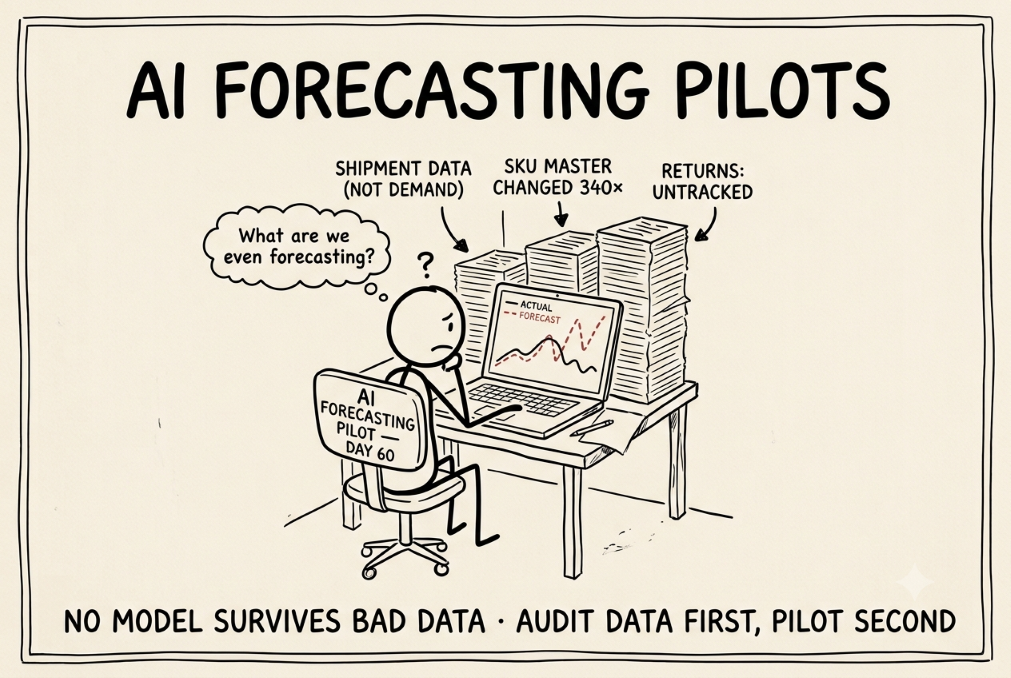
Why Your Retail CPG AI Forecasting Pilot Stalls At Day 60
Three data gaps kill a CPG AI forecasting pilot before day 60: shipments read as demand, a SKU master that churned, net revenue nobody traced.
Read →
The Amazon 1P Termination Notice: What 30 Days Actually Buys You
An Amazon 1P termination email arrives with 30 to 60 days notice. What happens to open POs, pending claims, and the audit posture that would have caught it earlier.
Read →
Why Amazon Deducts After Your ERP Migration
Two weeks after ERP go-live, Amazon deducts on shipments you sent complete. The cases scanned fine. The unit UPCs did not. What broke, and how to catch it.
Read →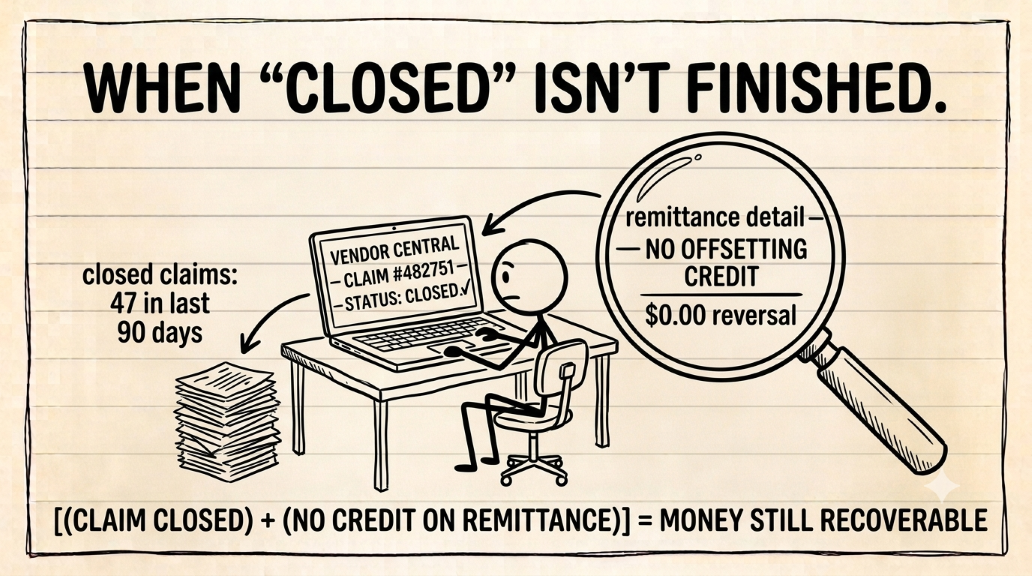
Amazon Marked Your Shortage Claim Closed. Was It Actually Paid?
A closed shortage claim in Vendor Central does not always mean the money came back. Three failure modes suppliers miss, and the 90-day re-audit that catches them.
Read →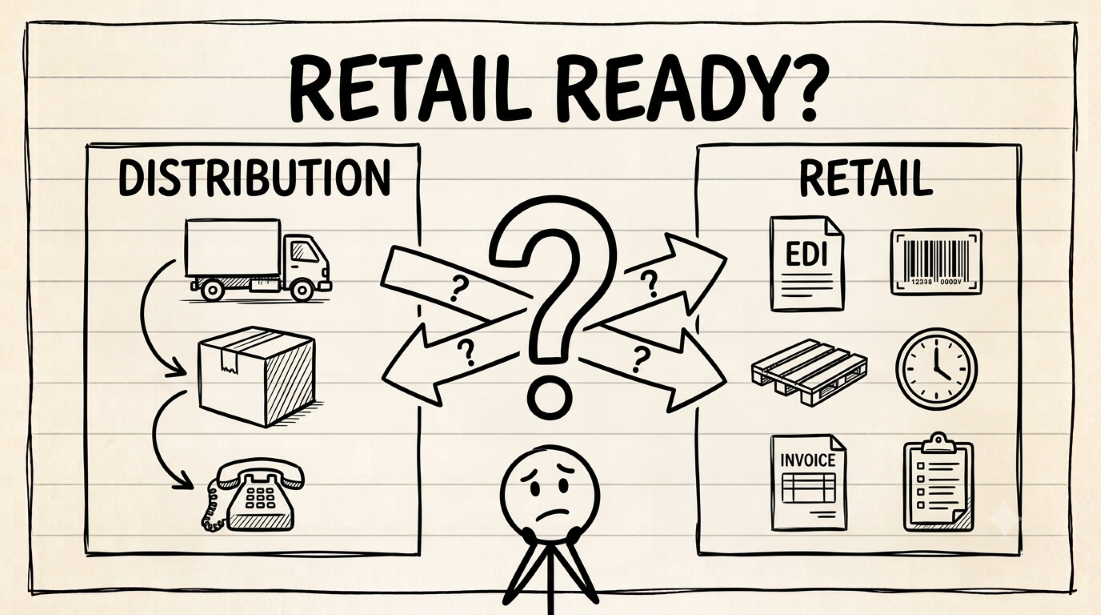
You Shipped to the DC. Why Are Deductions Already Stacking Up?
In distribution does not mean retail-ready. The six operational gaps that turn a first retail PO into deductions, and how to close them before shipment.
Read →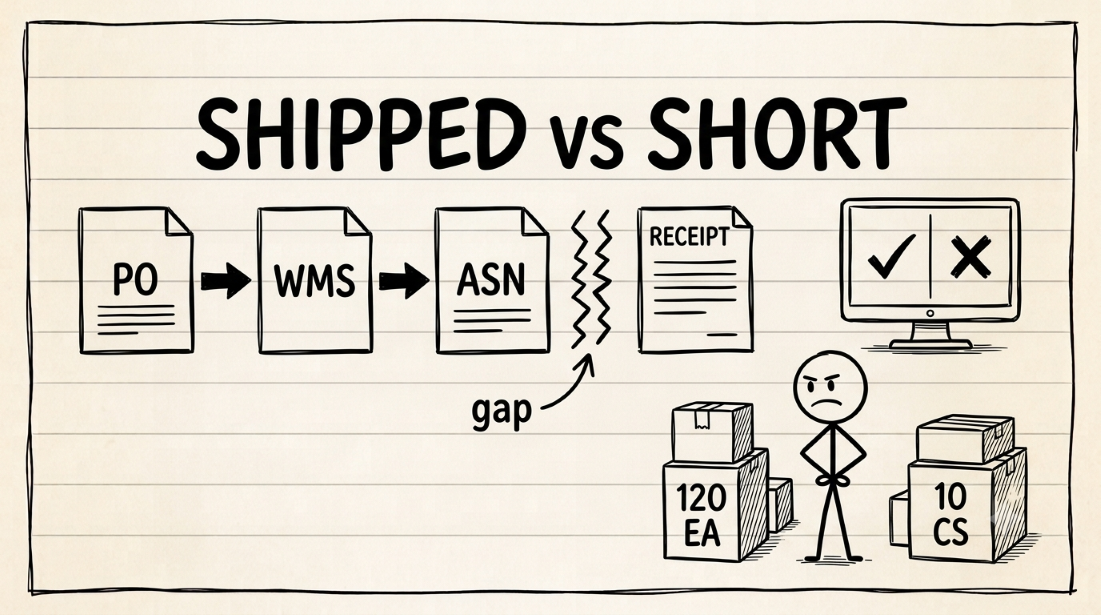
Why Your ERP Says Shipped and the Retailer Says Short
Four quantities from four systems create one shortage deduction. Trace from PO to ERP to WMS to ASN to receipt, find the first mismatch, and stop guessing.
Read →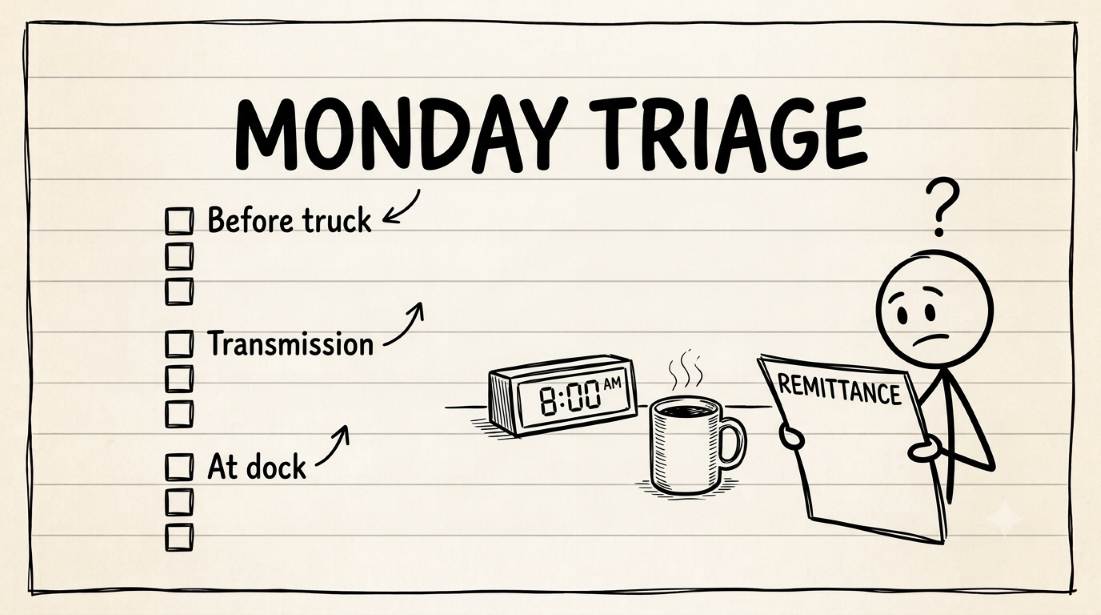
The 30-Minute Deduction Triage Before Your OTIF Meeting
Nine checks before the weekly OTIF meeting, four timestamps that replace carrier blame, and a script that turns scorecard panic into one next action per PO.
Read →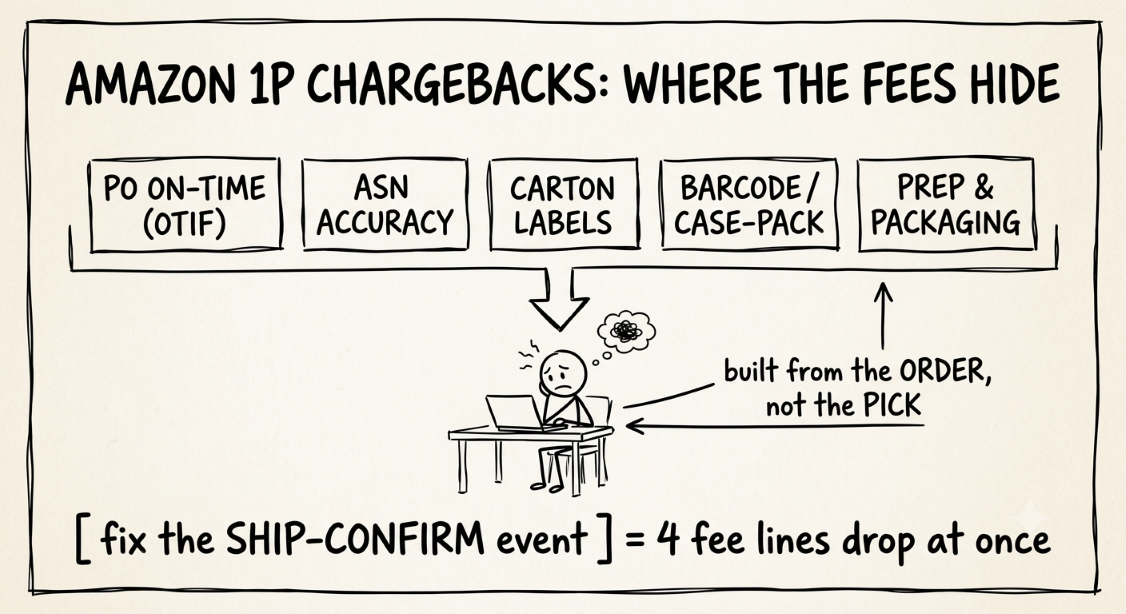
The Five Amazon 1P Chargebacks That Cost Vendors Most
The five Amazon 1P chargeback categories that generate the most fees, what triggers each, the prevention step for each, and which you can still dispute.
Read →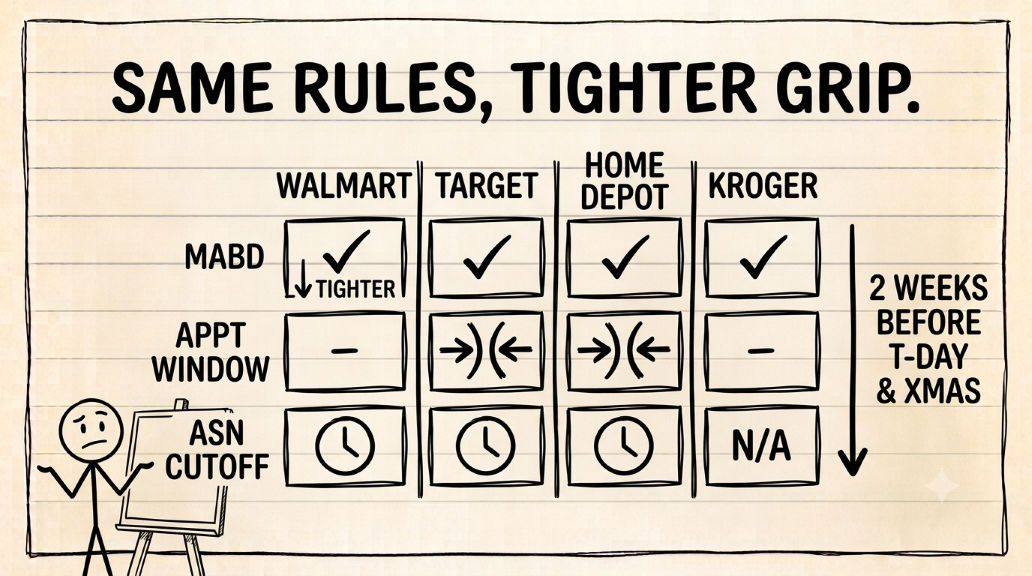
What Changes in the Routing Guide From October to December
What tightens in retailer routing guides from October through December: MABD tolerance, appointment cutoffs, and ASN timing shifts, retailer by retailer.
Read →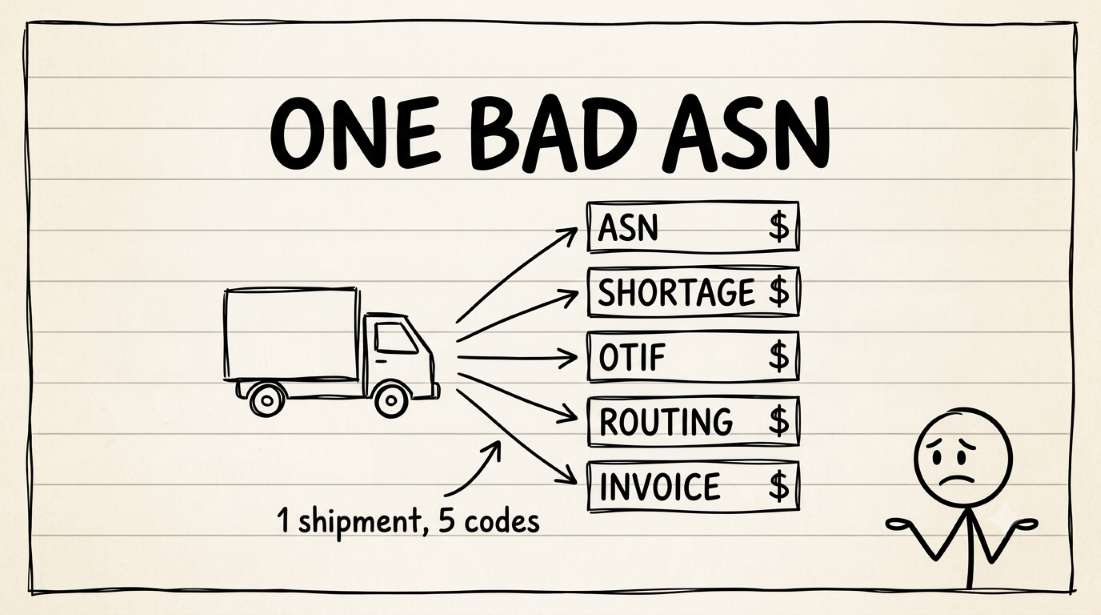
One Bad ASN, Five Chargebacks on the Same Shipment
A single EDI 856 error on one shipment triggers ASN accuracy, shortage, OTIF, routing, and invoice chargebacks. The prevention step for each.
Read →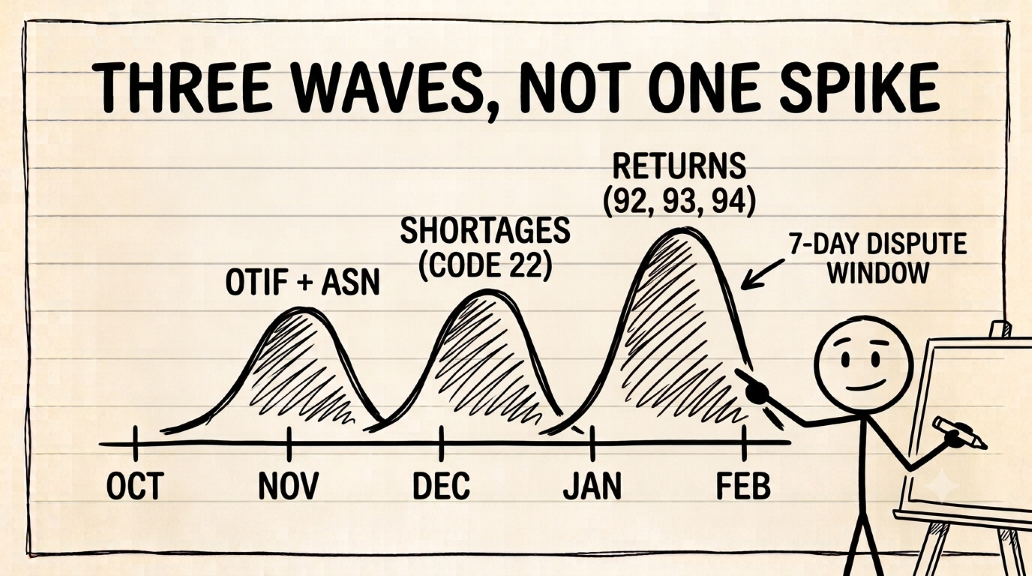
The Q4 Deduction Cliff: A Month-by-Month Calendar
Retailer deductions do not spike evenly across Q4. OTIF fines hit in November, shortages pile up in December, the returns wave crests in January. The calendar.
Read →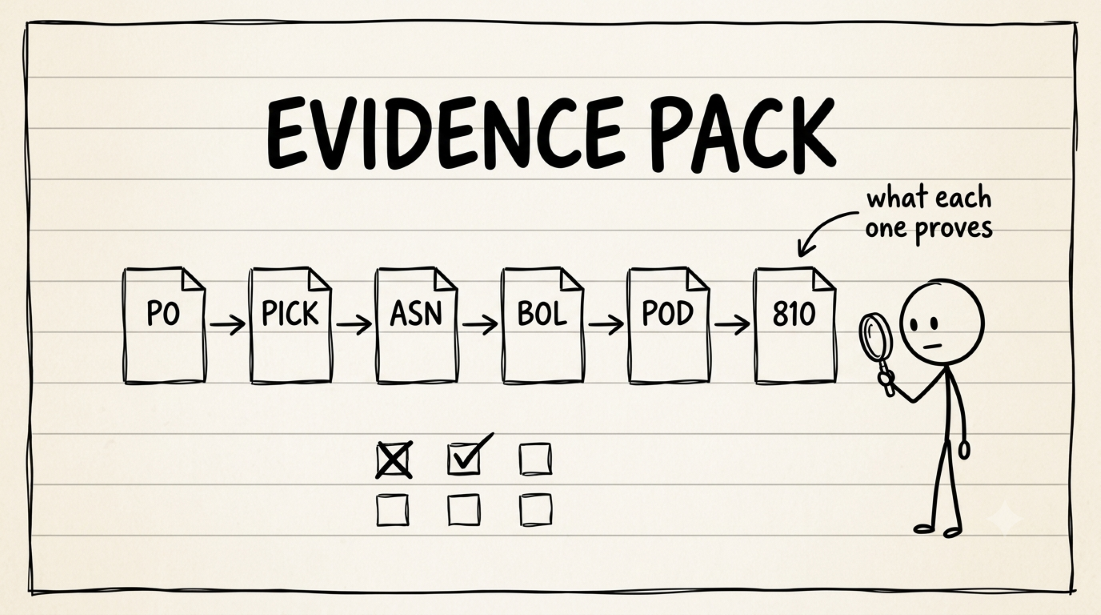
The Six Documents You Need Before Disputing a Deduction
The six documents that turn a deduction dispute into a case: what each one proves, what it doesn't, and the order to pull them before the window closes.
Read →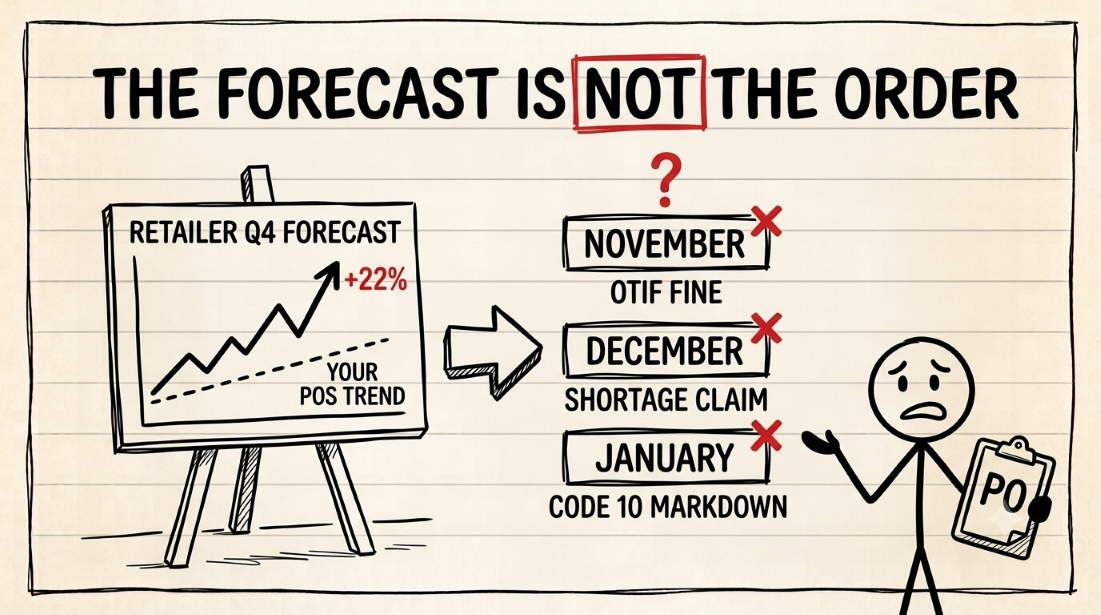
The Retailer's Peak Forecast Will Cost You OTIF in November
Peak-season retailer forecasts overstate demand. Accepting one without a counter-model stacks OTIF risk in November and inventory write-downs in January.
Read →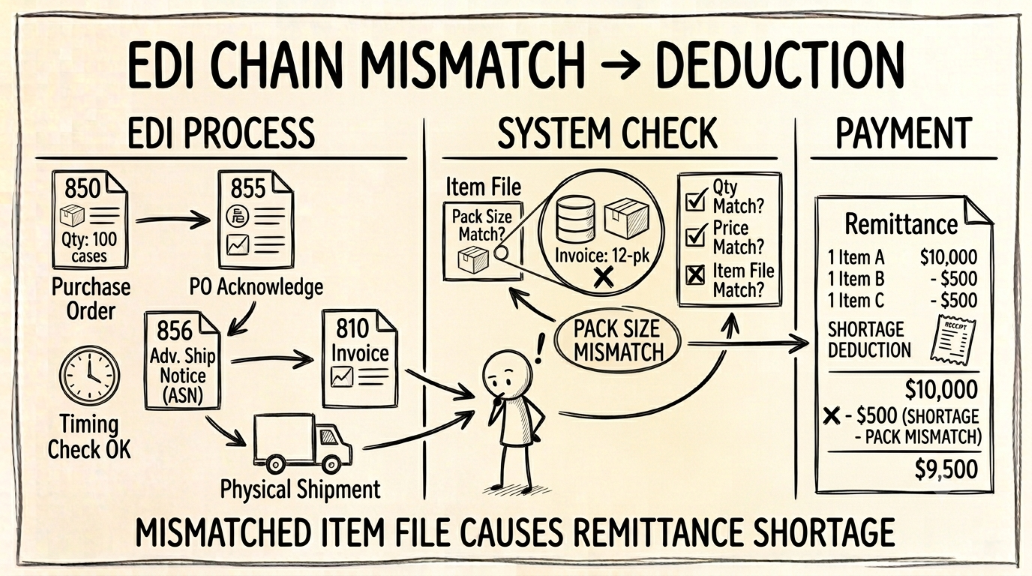
EDI 810: How One Pack-Size Field Becomes a Shortage Deduction
One pack-size mismatch in your item file, carried through the 850, 856, and 810, becomes a shortage deduction for goods that actually arrived.
Read →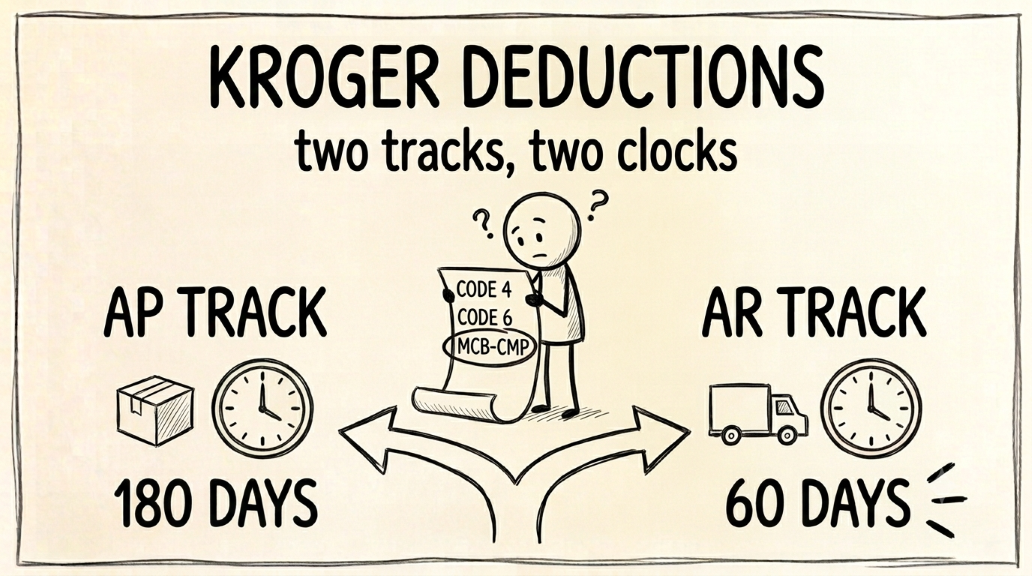
Kroger Deduction Codes 2-9 and the 180-Day Dispute Clock
Kroger deduction codes 2 through 9, the ORAD and MCB compliance fees, and the Supplier Connect dispute path. 180 days to file, 60 on MCB.
Read →
The Five Business Central Settings Driving Retailer Deductions
Five Business Central EDI failure modes that end as retailer deductions: item references, unit of measure, posting timing, and ship-to mapping.
Read →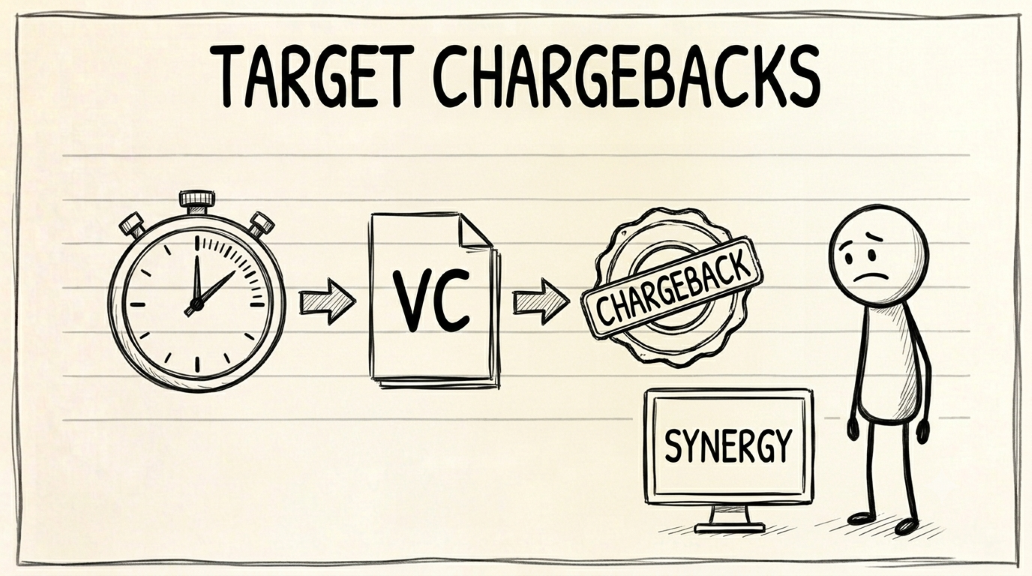
Target Vendor Chargebacks: What Each VC Code Costs
Target tracks violations, not AP codes like Walmart. What each VC violation type costs, how the VC prefix works, and how to dispute one.
Read →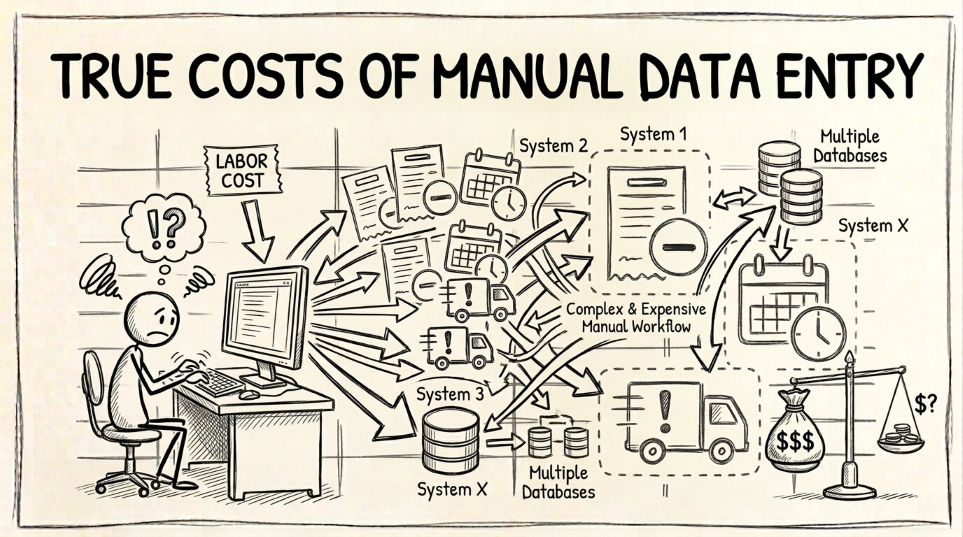
The Real Cost of Manual Data Entry at a Mid-Market CPG
Re-keying labor is the visible cost. Deductions, reconciliation hours, and rush freight stack on top. Free calculator inside.
Read →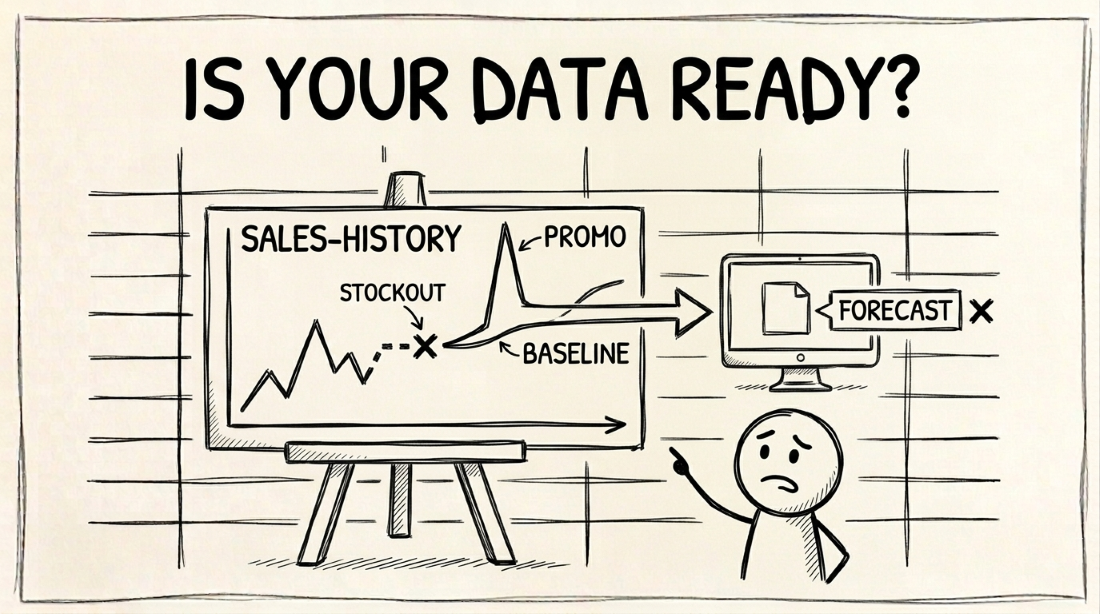
Is Your Data Ready for Netstock, o9, or Blue Yonder?
The six data-readiness checks that decide whether a Netstock, o9, or Blue Yonder pilot ships a working forecast at your SKU catalog.
Read →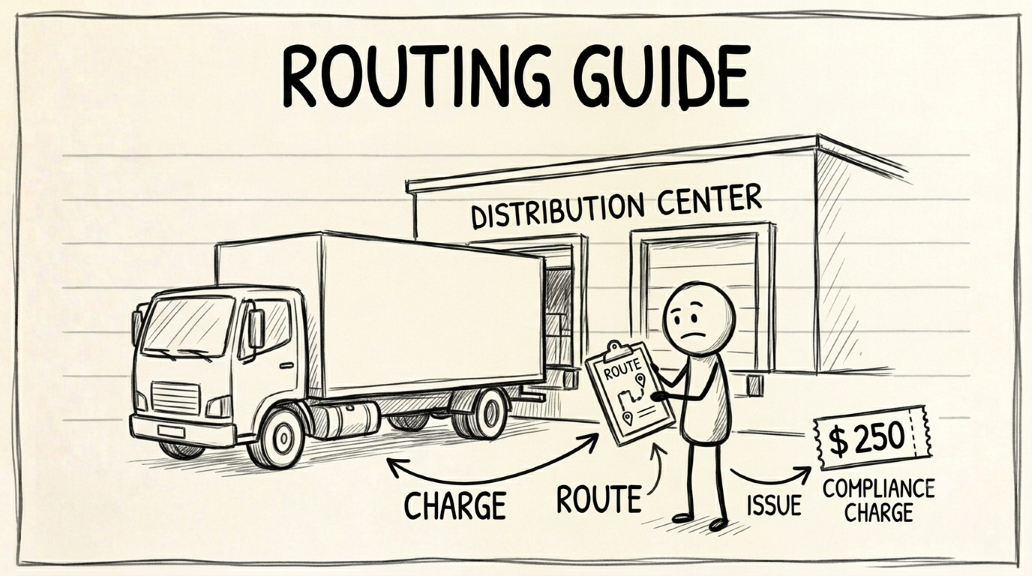
The Home Depot Routing Guide Rules That Cost Suppliers Most
Home Depot's rules for carrier selection, ASN timing, and labeling. What routing, BOL, and on-time violations cost suppliers at each tier.
Read →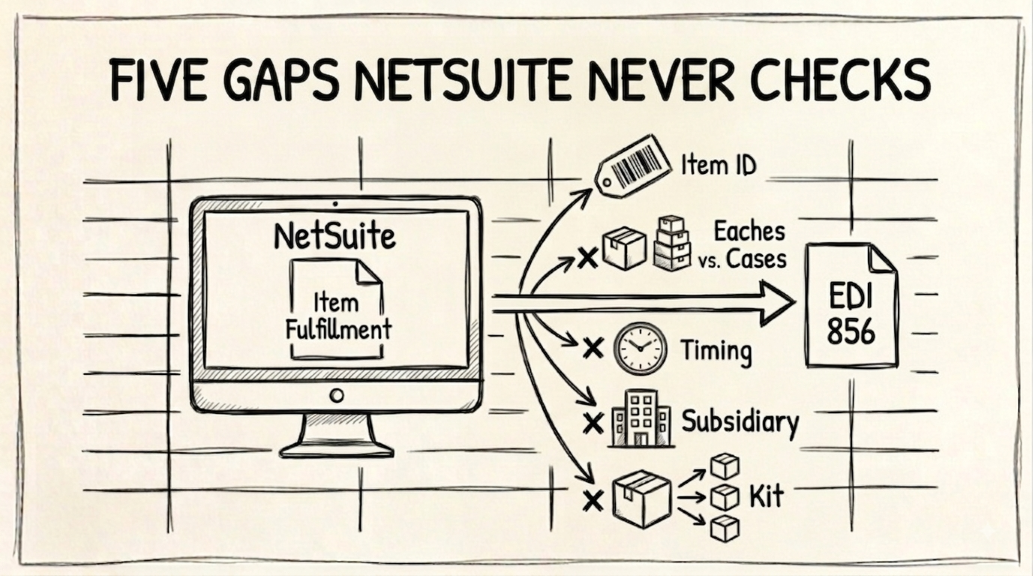
The Five NetSuite Settings Behind Your ASN Rejections
Five NetSuite-specific reasons the EDI 856 ASN comes out wrong: item cross-references, UOM conversion, pick timing, subsidiary mapping, kit explosion.
Read →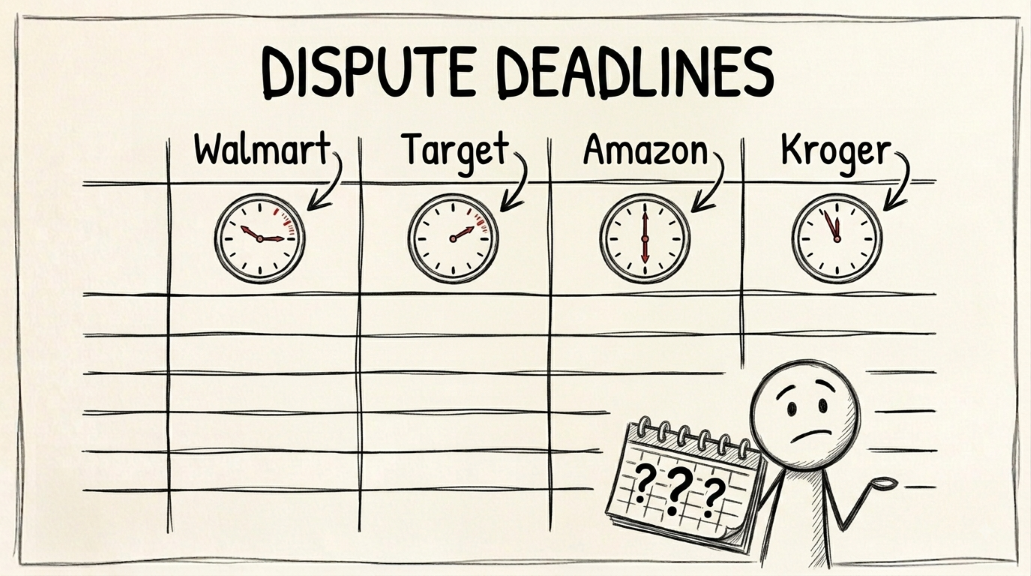
The Deduction Dispute Windows at Walmart, Target, Amazon, Kroger
Dispute windows for Walmart, Target, Amazon, and Kroger deductions in one table, with the portal and channel to file through for each.
Read →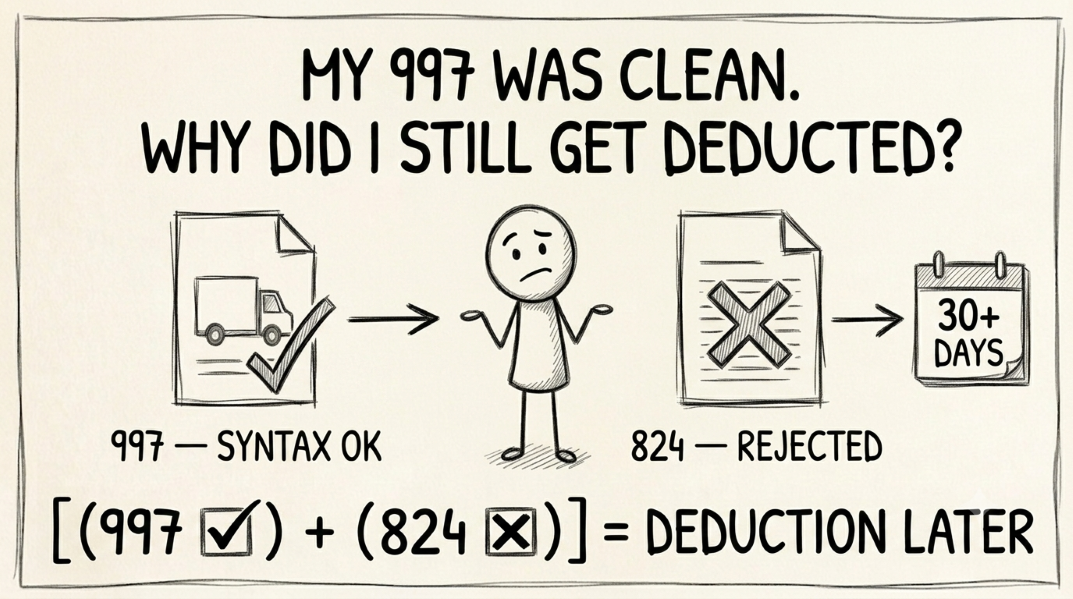
EDI 997 vs. 824: What Flags a Failure
A clean 997 only confirms your EDI transmission parsed, not that the retailer accepted the content. What each acknowledgment actually checks.
Read →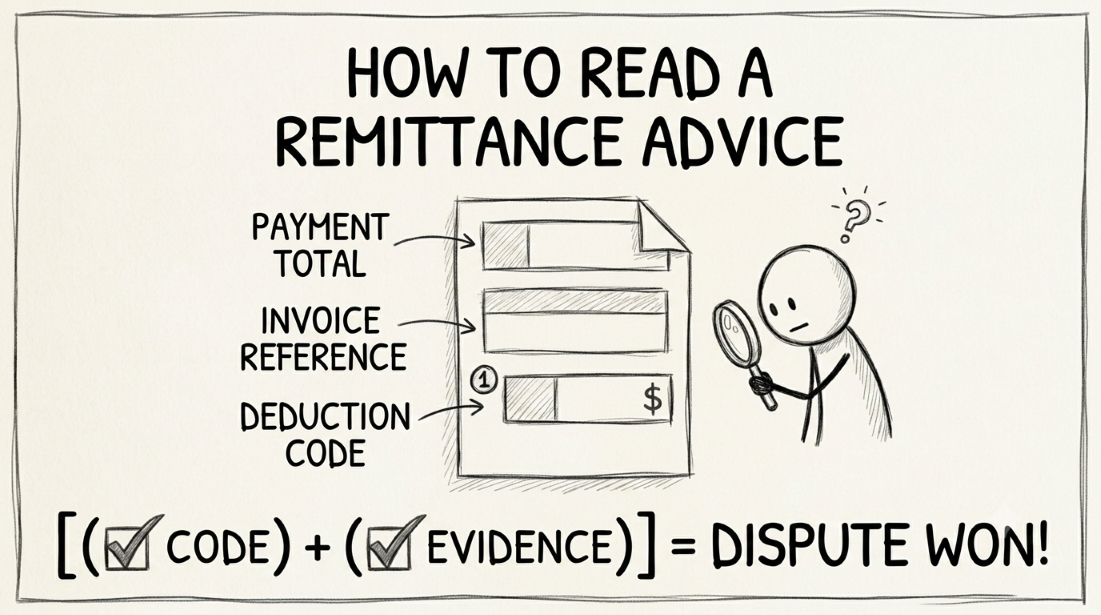
How to Read a Walmart Remittance and Spot the Disputes
Where the invoice number, PO number, and deduction code live on a Walmart remittance, and how to spot which lines are worth disputing.
Read →
What Is OTIF? On-Time-In-Full Explained
OTIF measures whether a supplier delivered the full quantity inside the retailer's window. How retailers calculate it, and what a miss costs.
Read →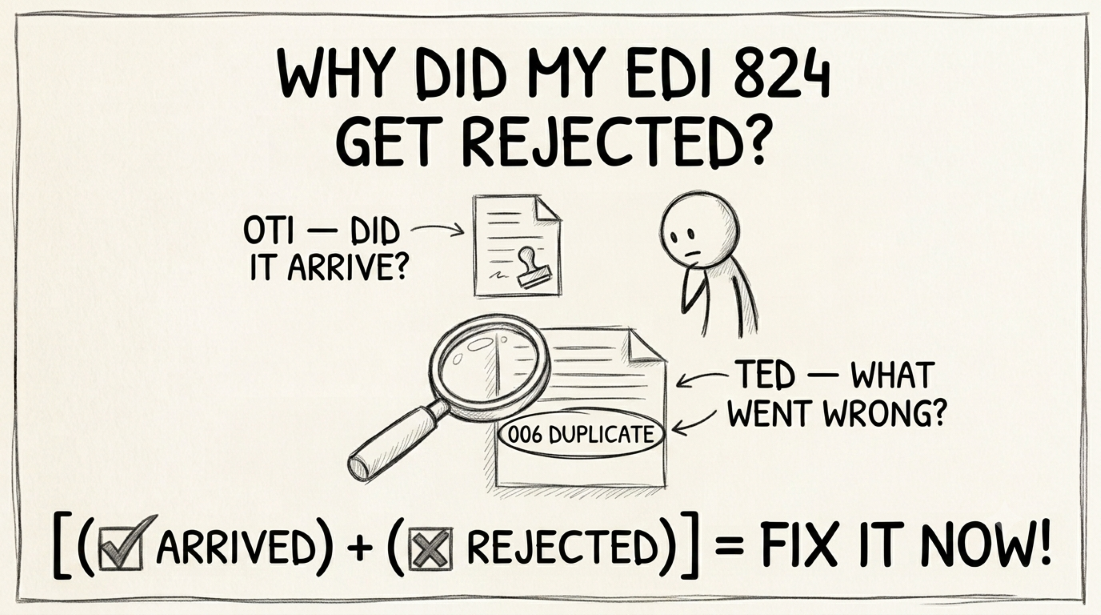
EDI 824: How to Read the Rejection Codes
The EDI 824 tells you why a transmission failed, not just whether it arrived. How OTI and TED segments work, and why an unresolved 824 becomes a deduction.
Read →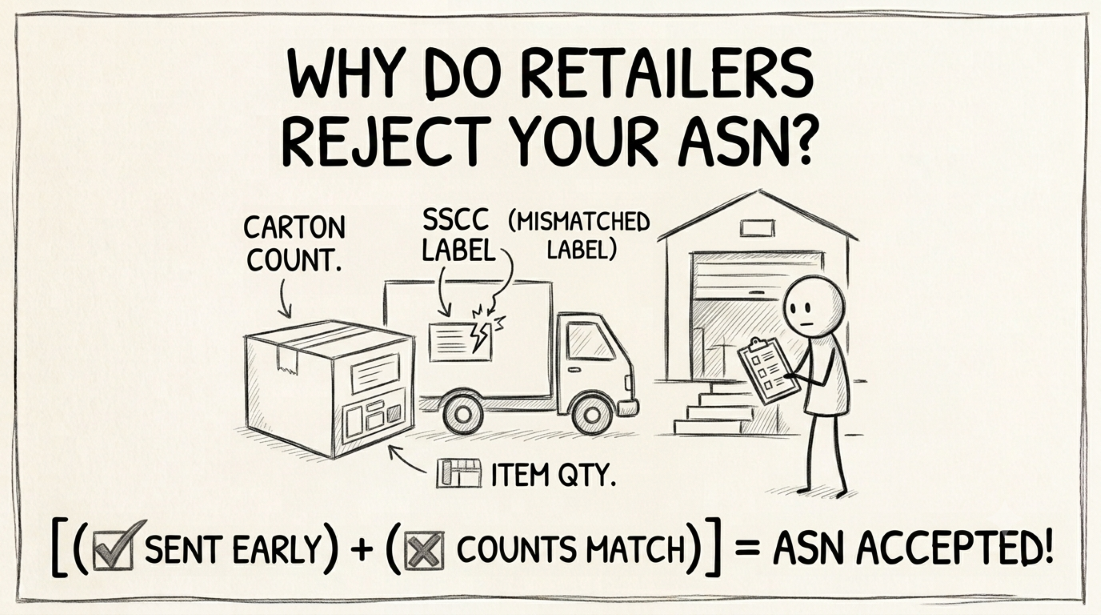
EDI 856 (ASN): Why Retailers Reject It
What the EDI 856 Advance Ship Notice carries, the six most common reasons retailers reject it, and which deduction it becomes if you don't catch it.
Read →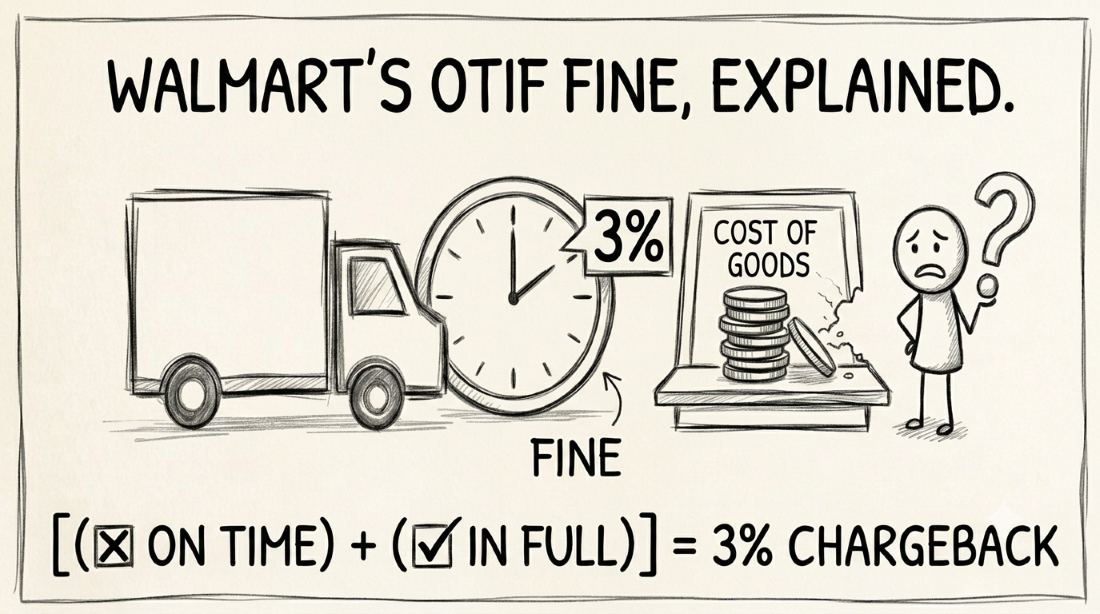
The Walmart OTIF Fine, the 3% Rate, and What Drives a Miss
Walmart's OTIF fine is a program-level chargeback, not a per-shipment dispute. Current thresholds, how the 3% rate applies, and what drives a miss.
Read →